

“I am only one, but I am one. I can’t do everything, but I can do something. The something I ought to do, I can do.”
Edward Everett Hale
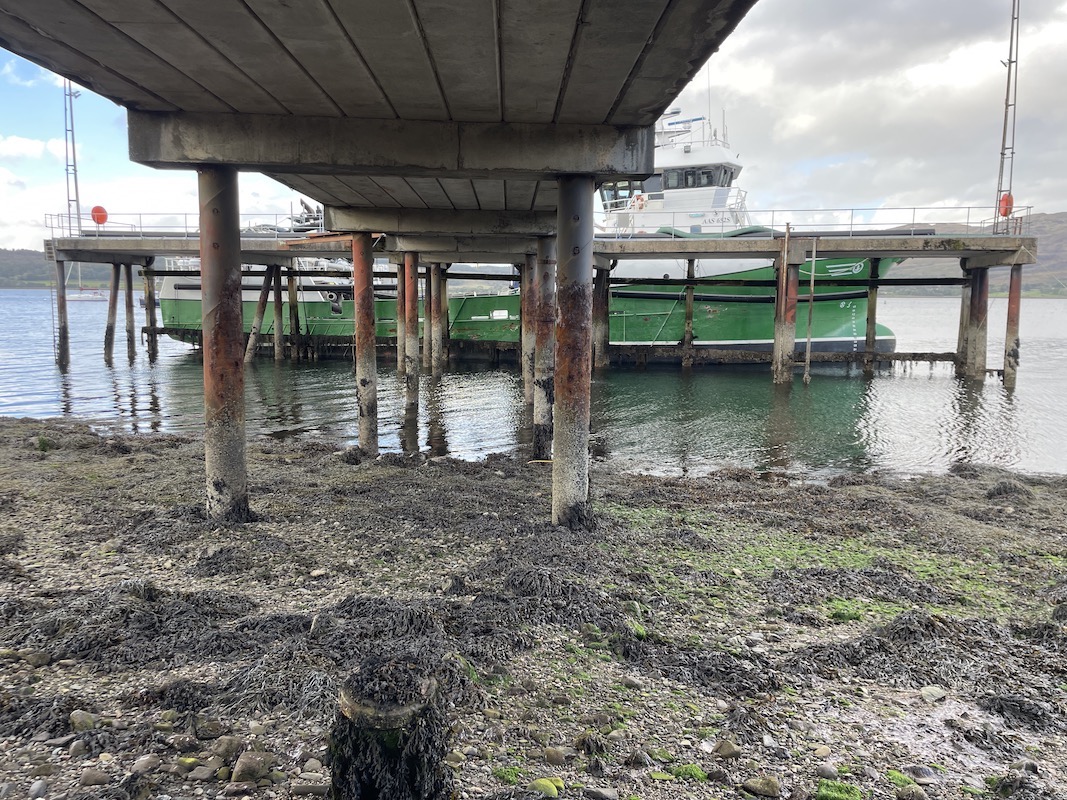
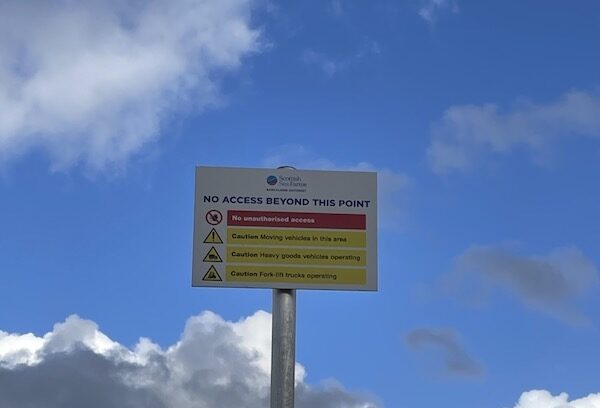
One of the big fish farm boats mentioned in Walk 5 – Part 1 sits on the end of Barcaldine pier as I make my way underneath and cross to the next beach. I ignore the sign, and roam.
First I pass a few big ropes and old concrete mooring blocks before the discharge pipes begin. It’s low tide so I walk towards the edge. There is disturbed water, something is being released.
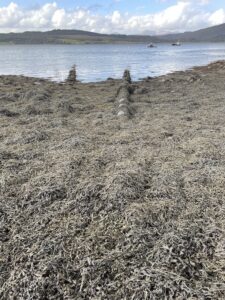
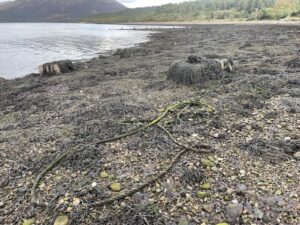
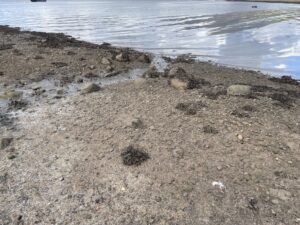
What I didn’t expect to see was the water gushing out half way along spreading some sort of matter all over the shore. What is it, is it authorised, and if so why? It is coating the shore here and floating around in the water further on.
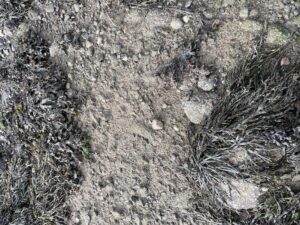
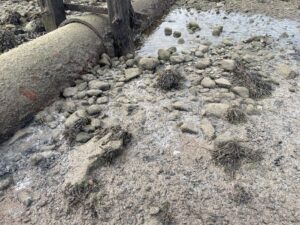
Last year we found out that the Hatchery, owned by SSF (Scottish Salmon Farms), a Norwegian company by the way, had knowingly exceeded its licensed discharges between May and November 2024. This should have been reported immediately. They chose not to do that and continued releasing formaldehyde and bronopol above their permitted levels.
Amazingly SEPA (Scottish Environment Protection Agency) eventually slapped a ban on them. However this was later lifted after some deal was struct which no-one can, so far, get full access to despite it being of public concern. SSF claimed these discharges were necessary for fish welfare due to problems with a fungal infection. So are they saying that their profit making product is more important than the welfare of the natural environment? It seems so.
There in lies the world wide problem folks.
What I find curious is that during the ban period they were able to dispose of the discharges elsewhere. Presumably they could have chosen to do that when they had a problem. Instead they used the loch as a dumping ground.
Fish farming is intensive farming for profit, think feedlot beef but with far higher mortality rates. The Loch Creran B farm being a horrific example of this. It was made fallow in 2022 after the mortality rate reached 36.7% (see pg 8.) Very similarly these fish, including those in the hatchery, are fed diets that now include soya and wheat as well as the fishmeal and oils.
You heard right, feedlot fish are now being reared on soya and wheat!
Apart from the obvious issues of land being used to grow crops to feed fish, there are also question marks about where the fishmeal and oils come from. We are assured by SSF that the fish used does not typically come from sources used for human consumption. How fabulous!
Er, what?
This is such a human-centric response which completely misses the fact that there are other creatures on this planet and in particular in the sea, who eat that fish. In addition we all well know that what maybe plentiful now, does not necessarily last. Think whales, cod, herring, to name but a few, decimated by over fishing.
I have recently read a brilliant book called Rewilding the Sea by Charles Clover. I would like to share a couple of quotes from it. Firstly talking about a Greenpeace report on West Africa and the fish feed industry there.
“Human communities are starved of healthy food for the sake of farmed fish across the world.”
Secondly,
“The association that represents the farmed salmon industry in Scotland states it does not ‘currently’ take feed ingredients from West African fisheries.”
Currently being the pertinent word. Currently they take them from South American waters. As their sustainable feed page states (click on the wee blue button next to the word species), Peruvian anchoveta is ‘thought to be one of the world’s most abundant fish species.’
They may have to update that page.
According to a very recent article in the Guardian which I highly recommend reading, the 2026 Peruvian anchoveta catch has collapsed due to ‘a combination of warming seas and decades-long overfishing.’ According to The Latin Times the anchoveta catch is in ‘freefall‘. Their headline reads, ‘El Niño Jolts Peru’s Fisheries: Anchoveta Catch Plunges 99% as Jumbo Squid Gains Ground Amid Expert Monitoring.‘
Read that again.
Jumbo squid gains ground. In other words, they do what they do and simply switch from one source to another. Perhaps the fish farming industry needs to take a hard look at what they are doing and the use of sustainable so liberally plastered across their websites.
I could rock on about sustainability and intensive fish farming ad infinitum but this article would never end. So back to my walk.
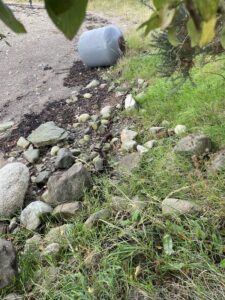
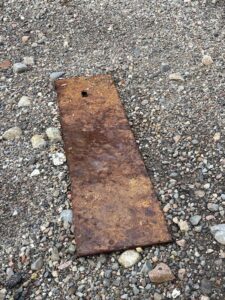
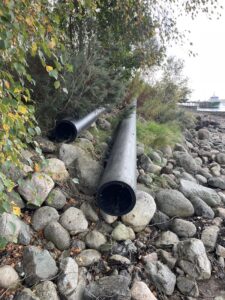
What a relief to get past the hatchery, though a faint sweet sickly smell around here follows me along the shore. Where is it coming from? Past old pipe, a float and rusty metal I reach Teithil beach, the place where fish farm cages were previously built without proper authorisation. 8.46 mins in to the video below you can see what was happening on this beach a few years ago.
I can report with great joy that this beach is now clean.
I mean entirely clean as far as I can see, and believe me I looked. Secretly I hoped to find some plastic but nope, not a single black spiral did I see. It has actually been thoroughly cleaned up. So they can do it. Although it did take a valiant effort by the video makers and others, who went through considerable challening discussions to push this to happen. Hurrah.
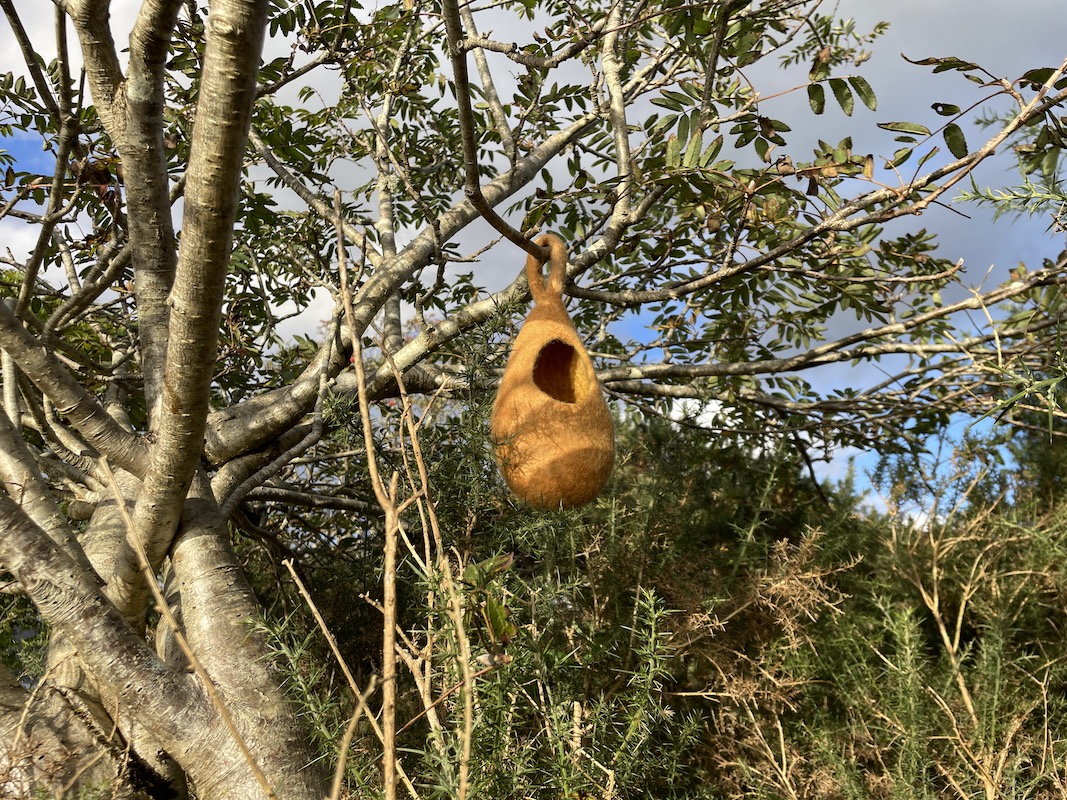
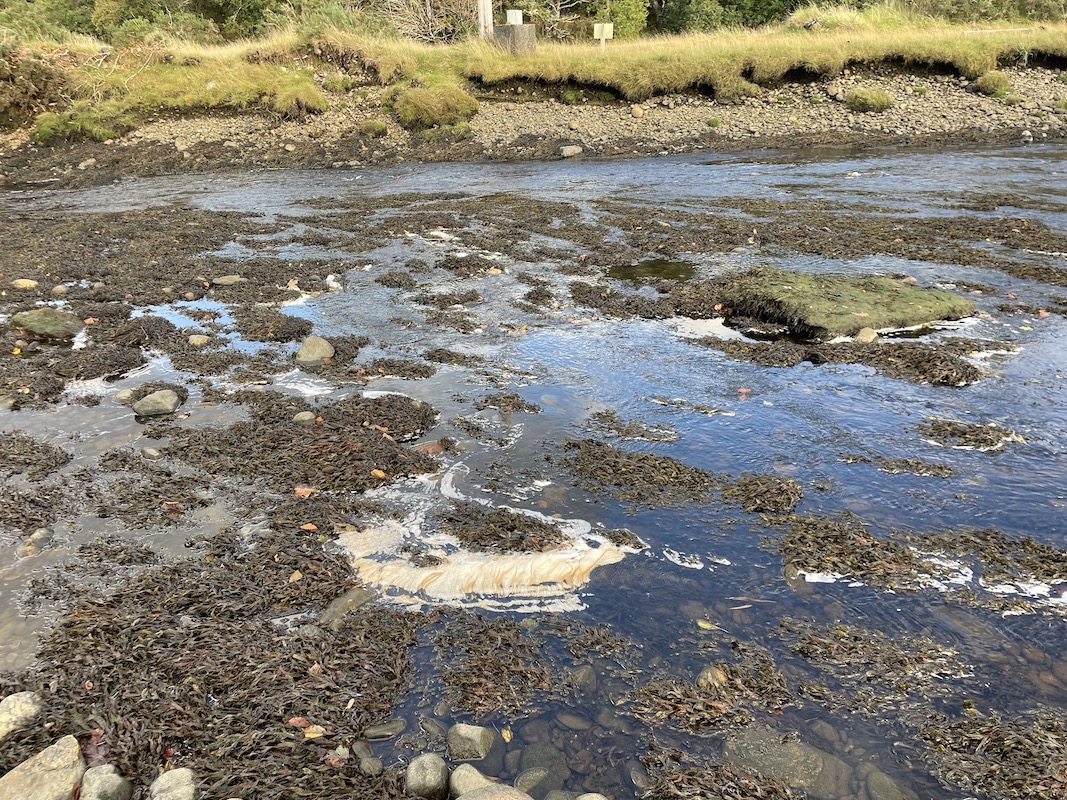
I leave my fifth felt pod on a tree near here, have inspiring chats with two dog walkers and then round the end of the beach at Rubha Teithil by the river there. Here I find a small collection of native oyster shells as an unpleasant looking foam floats by heading for the sea.
Honestly it feels like the sources of pollution are never ending, sigh.
To end; a confession.
At home, going through my seaweed collections from the day, horror of horrors, I discovered that what I thought was an old native oyster shell was in fact a live one. I couldn’t believe it.
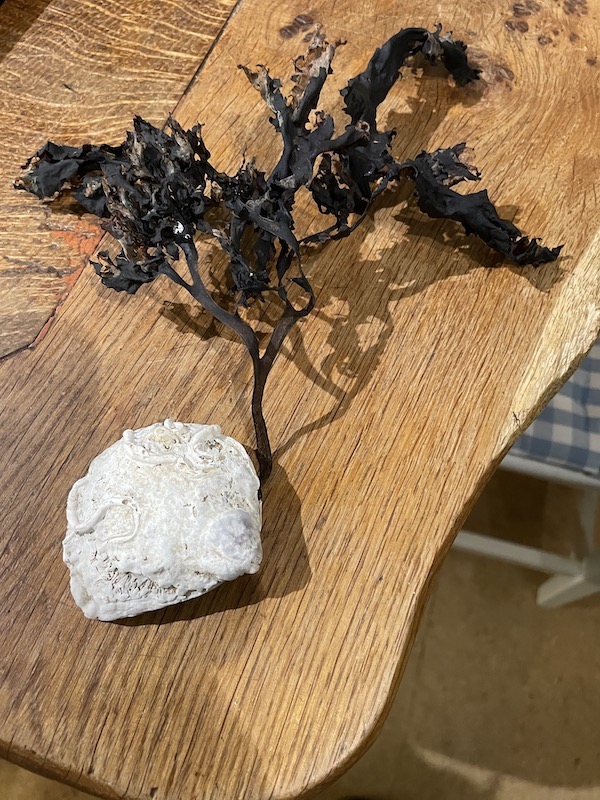
An immediate and hasty return was made to the beach, in the dark. Torch in hand I made my way back to where I thought I had picked it up. A big fling into the now high tide deposited it back where it belongs. Fingers crossed it survives.
“Be a part of the solution, not the pollution.”
Unknown

About the Author: Mairi

Latest Ripples
“If you wish to know the divine, feel the wind on your face and the [...]
“Hark, now hear the sailors cry, Smell the sea, and feel the sky, Let your [...]
"What we most need to do is to hear within us the sound of the [...]
"The voice of the sea speaks to the soul." Kate Chopin This morning I [...]
“The care of the Earth is our most ancient and most worthy, and after all [...]
"The question is not what you look at, but what you see." Henry David Thoreau [...]
“Instructions for living a life: Pay attention. Be astonished. Tell about it.” Mary Oliver After [...]
"As you move toward a dream, the dream moves toward you." Julia Cameron At last [...]
“Every artist was first an amateur.” Ralph Waldo Emerson As the painting continues I faced [...]
